Handwriting That Sharpens Your Thinking
Why writing by hand improves focus‚ memory and creative thinking‚ and how to combine pen and paper with your digital tools.
The Link Between Physical Movement and Mental Focus
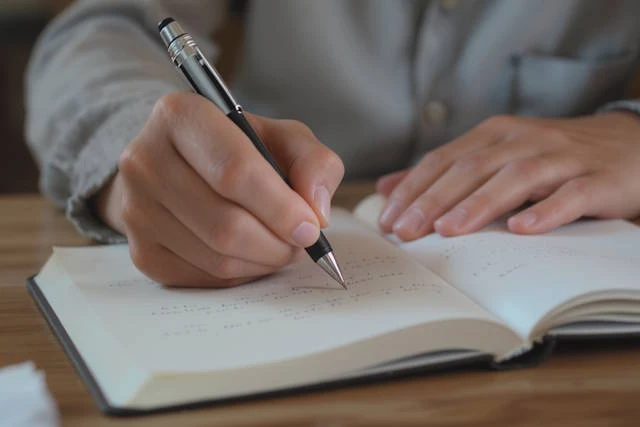
Handwriting activates areas of the brain that do not work the same way when you type. The physical movement of the hand‚ the slow pace of the pen on the page and the need to build each word from scratch all demand greater concentration. This process creates a direct connection between thought and movement and so deepens the understanding of the content itself. While your fingers write‚ your thoughts fall into place‚ and the inner rhythm of writing becomes a kind of meditation that refines ideas.
Choosing to Slow Down in a Fast World
Digital life dictates a fast pace of response - messages‚ emails‚ notifications‚ all demanding an immediate answer. Handwriting breaks this pattern. It forces you to slow down and restores the ability to go deeper into the moment. When writing is slow‚ thinking slows down too‚ and accuracy increases. Instead of reacting at once‚ there is time to process. This improves the ability to make decisions thoughtfully rather than on instinct and gives the brain back the sense of control lost among so many screens.
The Effect of Direct Contact with Paper
There is something almost sensual about the contact between pen and paper. The smell of the page‚ its texture‚ the soft sound of writing - all of these awaken a sense of presence. In this physical space‚ thought turns into concrete action. When you cross out a word‚ you see the trace; when you write a new line‚ you feel the weight of the words. This feeling does not exist in the digital world‚ where every correction disappears. Handwriting‚ on the other hand‚ leaves evidence of the path the thought took - from hesitation to decision.
Learning and Memory Through Slow Writing
Many studies have found that writing by hand improves memory. The reason lies in the direct link between physical movement and the process of understanding. When you write with a pen‚ the brain has to choose what really matters and put the idea into precise words. This process makes knowledge more personal and more accessible. That is why students who take notes by hand remember the material better than those who type them. In adult life too‚ writing down ideas‚ plans or thoughts makes them easier to remember and to put into practice.
The Emotional Experience of Personal Writing
Handwriting creates a deep emotional connection. Every handwriting is different - it carries character‚ mood and energy. When someone writes‚ even just for themselves‚ a personal expression emerges that has no substitute. It is not only the content that is written but also the form - the slant of the lines‚ the spacing‚ the pressure on the page. All of these tell a story about the writer and about the moment the word was written. It is a human act that brings warmth back to a world where most messages are sent as an emoji or a short reply.
Handwriting as a Tool for Creative Thinking
There is a reason many writers‚ designers and entrepreneurs still use notebooks. Handwriting lets thoughts flow without interruption. On paper there are no pop-up windows‚ no notifications and no autocorrect. As a result‚ even unfinished ideas can develop freely. Writing becomes a testing ground where you can play‚ change‚ doodle and rebuild. When there is no fear of making mistakes‚ creativity grows. Some of the biggest ideas are born out of doodles.
The Effect of Time and Returning to Your Thoughts
Handwriting cannot be edited quickly. Every correction takes effort‚ so it makes you think twice before crossing something out. This is one of the reasons it strengthens responsibility for your words. When you write slowly‚ there is more time to weigh the meaning of each sentence. The result is a more considered and precise text. And when you go back to read what you wrote‚ the physical process reawakens the emotional memory of the moment the word was written - turning writing into an experience of revisiting a thought.
The Connection Between Writing and Self-Awareness
There is something almost therapeutic about sitting down with a pen and a notebook. Handwriting lets you notice what you feel‚ understand what you want and watch your thoughts become tangible words. Unlike typing‚ which carries an emotional distance‚ physical writing creates intimacy with the content. It is a way to check in with yourself without judgment‚ a way to turn confusion into words and find clarity in the order that forms on the page.
Combining the Old and the New
There is no need to give up technology in order to enjoy the benefits of handwriting. Combining the two can create a balance - ideas that start on paper and later move to the screen‚ or lists written by hand before they are typed. Handwriting serves as a starting point where pure thought is born‚ free of distractions. Afterward‚ it can be processed digitally. This creates a bridge between the old world and the new one that brings humanity back to technology as well.
Summary
Handwriting is much more than a technical act. It is a way to slow down‚ listen to your thoughts and sharpen the link between an idea and its expression. In a world where everything is fast and abbreviated‚ returning to pen and paper is a reminder of the value of a human pace. It offers depth‚ precision and an inner quiet that allows you to think differently. The ability to stop for a moment‚ hold a pen and write may be one of the simplest yet deepest mindfulness practices. Because sometimes the way to truly understand something begins with a single line‚ written not on a screen but by hand.